
A global archive of independent reviews of everything happening from the beginning of the millennium


Read our Copyright Notice click here
For publication dates click here
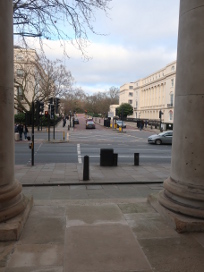
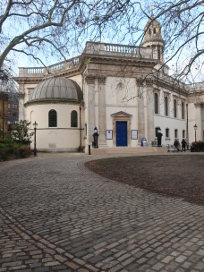
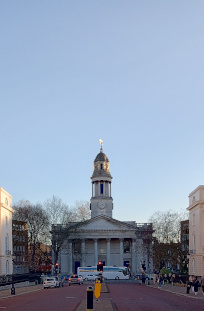
On 1 March 2026 I attended the last
organ recital introduced by the rector, Canon Dr Stephen Evans, who is leaving
after 15 years for another ecclesiastical post.
I must say in the short 18 months I have been coming to the recitals, I have not seen a more immaculately presented church but also the recitals have been so good and expansive.
TIME TRAVEL
Reviewed by ANDRE BEAUMONT
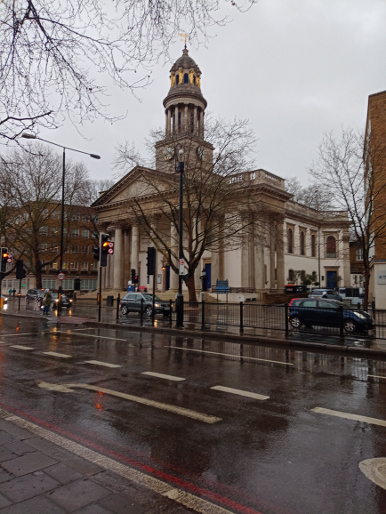
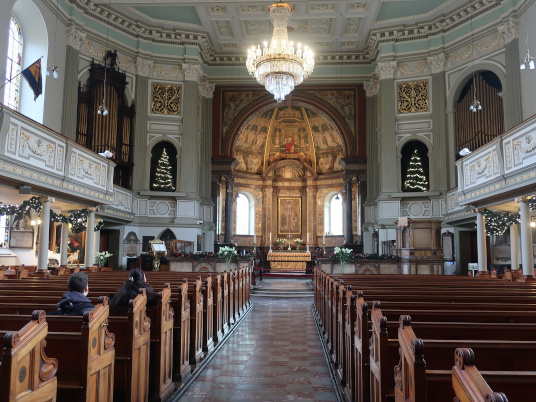
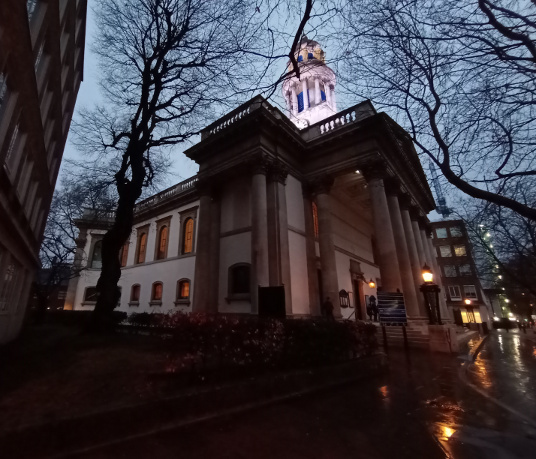
St Marylebone Parish Church is a Grade I listed church by Thomas Hardwick built in 1813-17, the parish church originally being called St Mary's. From a family of architects, like Robert Adam in a generation before, and with whom his family had a professional connection, Hardwick too paid for his own grand tour lasting 2-3 years in peacetime from which he learnt all the essentials of classical architecture in Italy.
Drawing inspiration from his tour, Robert Adam, one of Scotland's two greatest architects, created a vibrant strand of Neoclassical architecture which, together with the other strands, had an influence on Europe at least as great as the Napoleonic wars, which also spread Neoclassicism.
Wars come and go and people have been free to travel with minimal bureaucracy at different times in history across Europe. Without Adam's extensive sojourn, Britain would be much the poorer - in London think of the Georgian architecture in Portland Place and the Adelphi and the grand houses - but also the long abiding cultural influence, done no favours this century with the erasure of parts of artistic history at Osterley House. (I have 1977 colour photographs that show what was there. You can celebrate unnamed occupants but do not destroy art work and historic architectural expression in listed buildings.)
So my view is let the society take advantage of cultural exchange when it can. It will enhance a nation's wellbeing and prosperity more than concentration on free trade or its opposite - after all, Napoleon's continental system was part of his downfall. (The portraits of Robert Adam and Thomas Hardwick are both to be seen in the National Portrait Gallery which will not be the case with any trade ministers as commerce usually finds its way around difficulties anyway.)
At this church I love the way basic architectural elements from the classical repetory have been combined in an imaginative and very well-proportioned whole, not overly ornate and not too pared down.
It is a bit like the borough of St Marylebone always was before its assumption into the City of Westmnister - allowing for distinction without overflowing into pretention. It applied to its architecture, its townscape and its people. It was not a borough that had to defer to others ones. In resources and people it had self-sufficiency; already by 1801 it had 64,000 inhabitants. Regents Park sits to the north, Hyde Park to the south-west and Mayfair to the south, so essentially it sat in an unstressed environment.
The GLC's Westway eventually dumped too much traffic along its northern edge, Marylebone Road, and the Mayor of London regime too many taxis along its southern edge, Oxford Street, the nation's premier shopping street. That street was known the world over for the buildings of M&S, Selfridges and John Lewis. Arguably Harrods in Knightsbridge offered a more concentrated shopping experience. Should M&S demolish its historic facades no one, soon, will remember it once was a national institution with a destination store. It has expressed a belief that its website is its flagship.
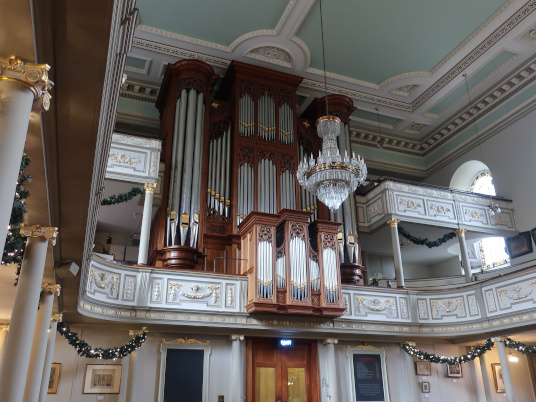
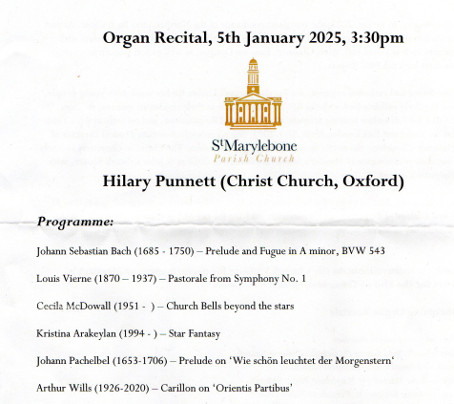
Marylebone for me is time travel. All my first decade education took place in the borough. For the New Year I attended an organ recital by Hilary Punnett.
With a flat ceiling and overhanging balconies in a classical church you do not expect to hear Bach as he conceived it but the church and organ do have a distinctive and characteristic acoustic you can recall.
You can hear it on the CD, The Rieger Organ of St Marylebone Parish Church, by Gavin Roberts, a copy of which I picked up on the way out and which I particularly like for the clarity of the liner notes.
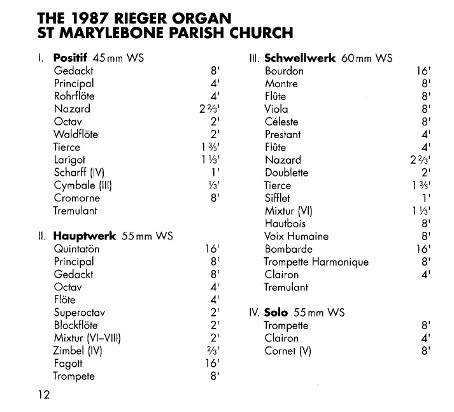
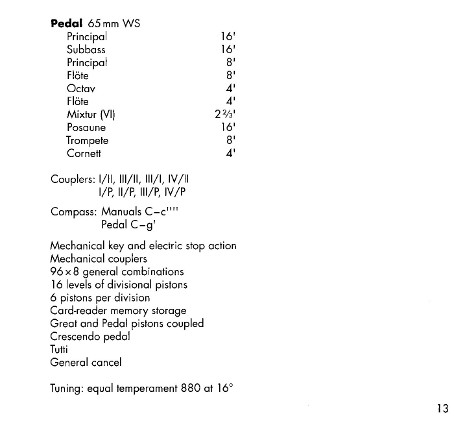
Post-war Modernist architecture, when it was well-maintained, sat very well in Georgian Marylebone - both styles having rational, pared-back lines - much better than Modernism sat in Victorian boroughs. The 1987 organ is from after that period but seems a good fit for the classical building, visually and aurally.
So I thought the modern pieces, Church Bells beyond the stars and Star Fantasy, chosen by the organist, really suited the space and being played on this organ. After all, one of the delights of being brought up here, before the moon landing, were the visits to the Planetarium on Marylebone Road to travel in time a little to the solar system and stars beyond.