
|
|
A global archive of independent reviews of everything happening from the beginning of the millennium |
|
For publication dates click here Read our Copyright Notice click here ***** Social media has so atomised societies heavily exposed to it that it has led to the decline in collective rationality, the wish to use well argued cases, and depth of interest. London Bridge is falling down falling down Poi s'ascose nel foco che gli affina The ousting of some high profile advisers to the UK government recently has been brought about partially by their advocacy of digital ID, which advocacy marks the move away from rationality in some parts of the governance system to the sirens of digital excess, and may entrain others. Why go for a dystopian society which you will never control? Those who have made a lot of money tend to promote not the most solid but the most stolid political ideas, for want of political imagination, and digital ID is a case in point. ***** The end of the road for digital ID starts right now with AI even before quantum computing potentially destroys any system using elliptic curve cryptography. Post-quantum cryptography is being trialled but it will not save existing digital ID systems and their passwords. (YouTube Screenshot: @addielamarr) Because so many people and organisations must access them, it is impossible to design digital ID systems without coding flaws. How many months before other AI models with comparable jumps, in the hands of those with an interest in attacking full digital ID systems, emerge? ***** From the beginning of Covid, digital became a compromised entity. People did not like the information that came through digital - manufactured, manipulative and dull. People did not like only being allowed to move around with it. It was disconnected from the real world and spread poor quality ideas, advice and supposed solutions. On reflection, and on the balance of things, digital has not improved the world much since then. It has added cost and destroyed parts of civilisation. It does not at all need to be an overly large part of life. The disillusionment has begun not with AI (though that may be part of it) but with digital itself. ***** Gen Z is the first generation since the baby Bs to know how to reject. ( B, X, Z, what next?) Not rebel as well like the Bs sometimes did - which would lead these days to them to being victimised - but, discreetly and firmly, reject. We see it everywhere - cars, the Anglo-Saxon ways of marriage, net zero, social media, the digital excess - all rejected. They do not serve them much. What is the point of a digital speaker that spies on you, with dreadful sound quality, when you can have two, chipless and with almost audiophile quality, for the same price? All reject, all change, please! ***** Long term contracts, like of employment, marriage and mortgage may have given liberty to the Bs and Xs but today, especially in the very materialistic Anglo-Saxon countries, they have so often become the vehicles for hard-to-escape exploitation. People may still frequently need them but it will be a surprise if Gen Z do not find workable alternatives. |

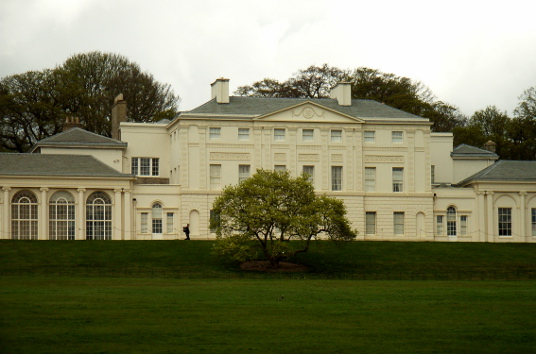
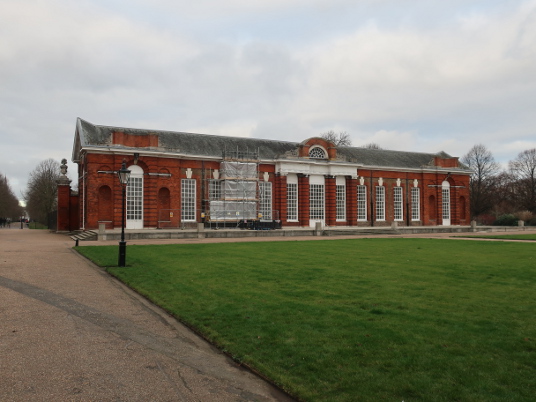
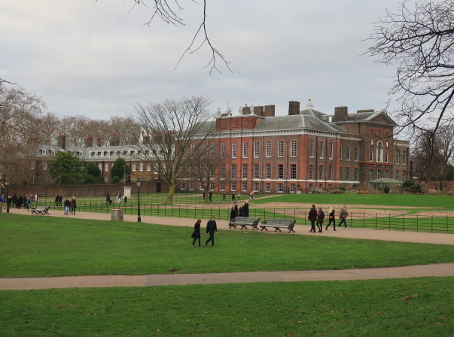
WELCOME to the GARDENS pages of WORLD REVIEWS! We have the following reviews in this section: GARD0008/0626 click here for: THURET ARBORETUM Reviewed by ANDRE BEAUMONT GARD0007/1023 click here for: VILLA THURET SCULPTURES IN THE GARDEN 2023 Reviewed by ANDRE BEAUMONT GARD0006/0718 click here for: JARDIN THURET Reviewed by ANDRE BEAUMONT GARD0005/0717 click here for: PARC EXFLORA Reviewed by ANDRE BEAUMONT GARD0004/0417 click here for: THE GARDENS OF AUDLEY END Reviewed by ANDRE BEAUMONT GARD0003/0217 click here for: e-LUMINATE FESTIVAL 2017 Reviewed by ANDRE BEAUMONT GARD0002/1224 click here for: A BRIEF HISTORY OF THYME Reviewed by DAVE FRANKLIN GARD0001/0622 click here for: VILLA CASTELLA, FLORENCE Reviewed by JOHN WOOLLARD Kenwood House, Hampstead with its Orangery on the left, viewed from the 'Capability' Brown garden The Orangery at Kensington Palace. In 1984 Ronald Reagan landed in his helicopter on the lawn, greeted by Margaret Thatcher, on his way to the economic summit Kensington Palace Air quality measuring equipment on Marylebone Road. The road has since the sixties been a loser to centralised road traffic schemes. There is a lot of road (and pavement) and .... the pavement could do with planting on the road edge rather than commercial bikes. How many are taken and who really wants them there? It is almost an insult to put them in front of an urban design university. Elsewhere residential streets are cluttered with these indiscreet docking stations. In other cities the conveyances are heavy, electrically powered hire scooters, not even docked but strewn across pavements when not in use, which real bicycle users are often scared of being run into by. The vaunted age of bicycles, if it ever existed for Britain, is over (bicycle shops are closing everywhere) and cities are frightened to regulate the powered scooters and cycles, as happens in other countries, for fear of antagonising the hire companies and those who exploit the users as delivery drivers. Cannes Film Festival Who wanders along the pavements any more, perhaps with their dog, enjoying the society of others and the space, not forever watching their back? Is it social media or the electric conveyances that atomise society? For centuries, the horses, then the bicycles, then the cars, then the lorries, vans, motorbikes and scooters kept to the carriageway. Why not now? |
|
|
|