
A global archive of independent reviews of everything happening from the beginning of the millennium


Read our Copyright Notice click here
For publication dates click here
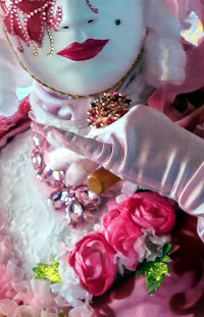 Detail from an invitation to a Valentine's eve
carnaval on the Boulevard d'Aguillon
Detail from an invitation to a Valentine's eve
carnaval on the Boulevard d'Aguillon
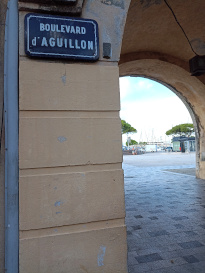 Boulevard d'Aguillon sits one side of
Vauban's fortifications for the town of Antibes - on the side that commands the
port, home in the summer to the largest yachts which moor in the western
Mediterranean
Boulevard d'Aguillon sits one side of
Vauban's fortifications for the town of Antibes - on the side that commands the
port, home in the summer to the largest yachts which moor in the western
Mediterranean
A little bit to the surprise of long term observers (coronavirus winnowed the alternatives) the boulevard has become the premier location on the true Côte d'Azur for the temporary display of emerging art that could make the grade.
The municipality owns space in the fortifications and its inspired policy has been to assign it for periods of weeks or months to emerging artists through Les Casemates de la Creation (which I think uses great fonts in its publicity).
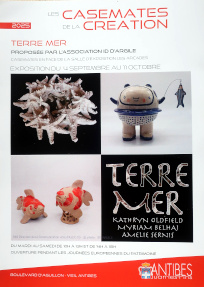
The largest of these spaces, this year hosting Terre Mer, doubles as an exhibition space as those exhibiting are not resident on site.
Opposite is the Les Arcades exhibition space, refurbished by the municipality, which is a venue displaying international level artists, usually working from Provence.
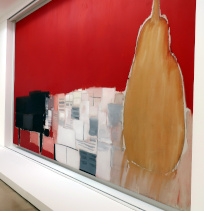 For a real de Staël there is one currently on
exhibit in the Picasso Museum
For a real de Staël there is one currently on
exhibit in the Picasso Museum
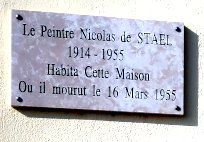
Come down from the terrace of the Picasso Museum [2] and along another section of the fortifications - the ramparts from the Bastion St André - and you will see the house of Nicolas de Staël, though by now much subjected to makeover.
With these openings, the photographs are taken and one finds there are far too many works to cover - but the art is a visual thing. In a world with declining traditional media coverage, and a lot of noise, there will inevitably be competition for non-time limited, full-blown coverage.
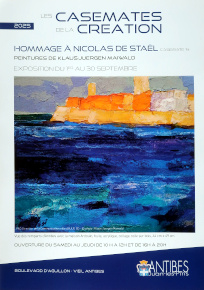
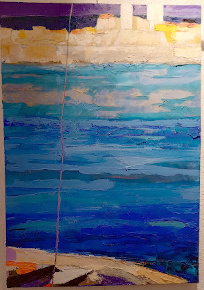
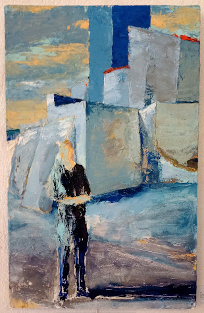
Hommage à Nicolas de Staël had an opening one week before the three featured for 4 September 2025. It is the work of Klaus-Juergen Maiwald and the scenes of Antibes are recognisable in it.
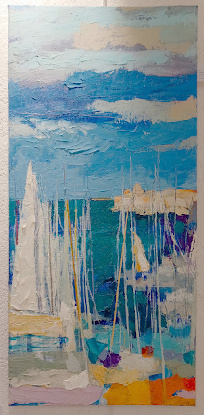
TERRE MER
Reviewed by ANDRE BEAUMONT
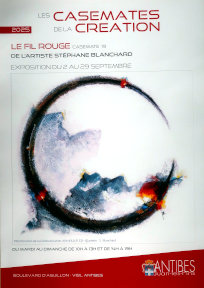
First up of the Casemates is Le Fil Rouge, with the work of Stephane Blanchard, an artist working out of Nice. Le fil rouge is a French metaphorical expression but all the Casemates artists were probably given unifying titles for their particular shows.
If you seek, independently, a unifying theme through the paintings it would perhaps be of lurking hot, physical faultlines, like lava, below the folds of the physical world. The Alpes and the Alpes Maritimes are near to Nice. Certainly, the visual representation of red suggests this geological fire and a red thread is best seen in the triptych.
Interestingly, the exhibition text describes the red thread in romantic terms so take your pick:
"The Red Thread" The two people connected by the red thread are destined lovers, regardless of place, time or circumstances, This magical cord may stretch or tangle, but never breaks ....
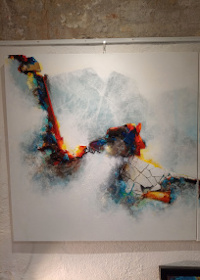
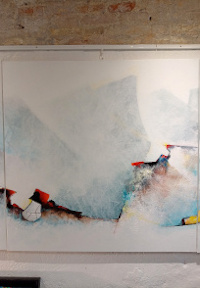
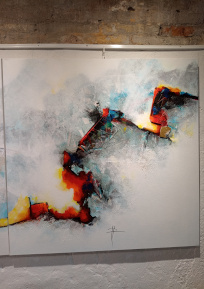
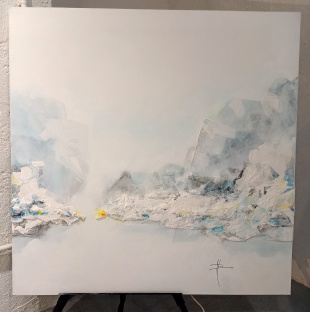
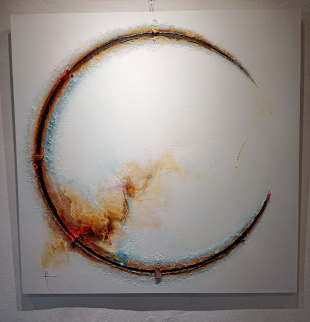
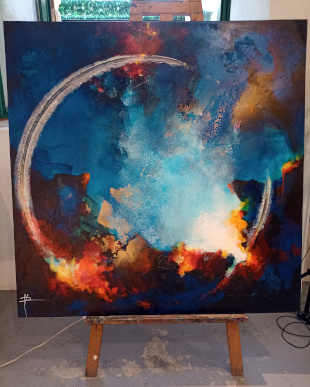
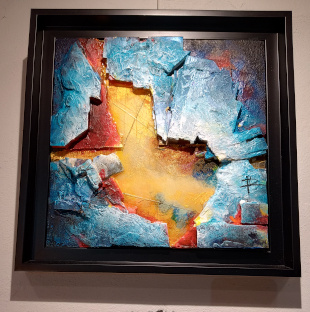
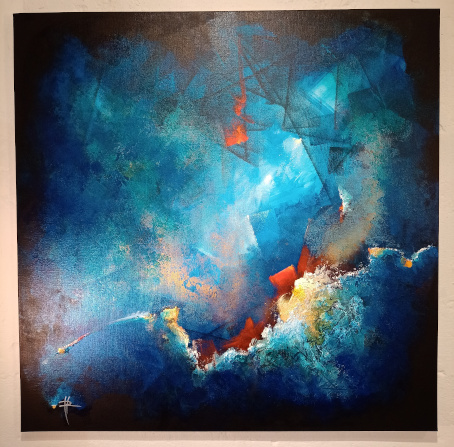
This is why art is so powerful in the moment and in predicting the future. It brings forward individual and collective thoughts from the subconscious, transitioning them to consciousness.
Are the terre and the mer being heated by geological activity, or by methane escape including from tsunamis, or by solar activity or, though no longer provable scientifically using this decade's data, by carbon dioxide?
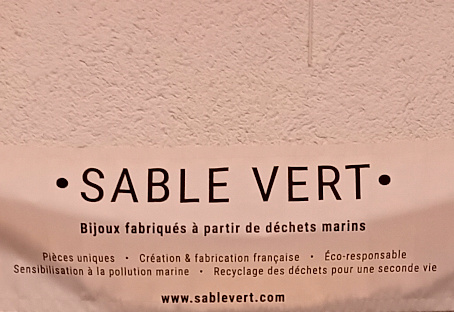
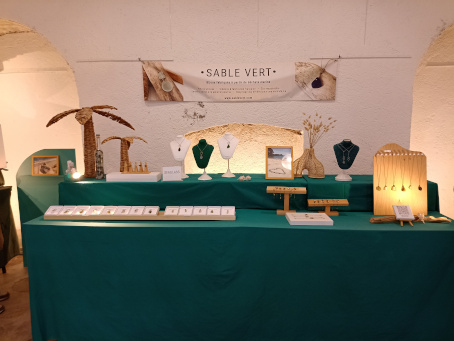
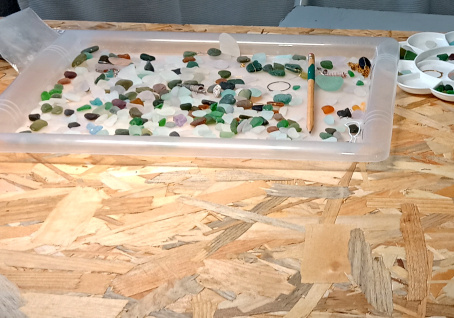
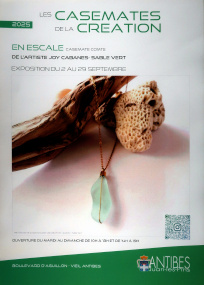
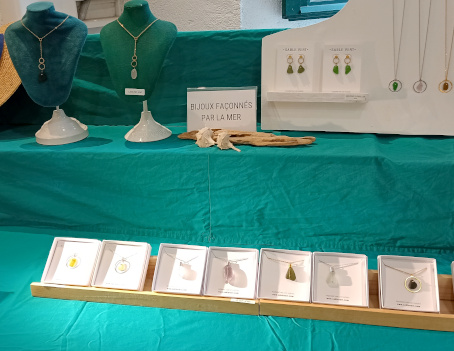
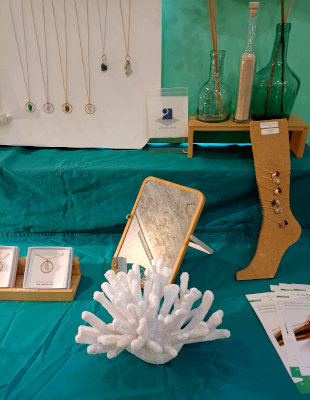
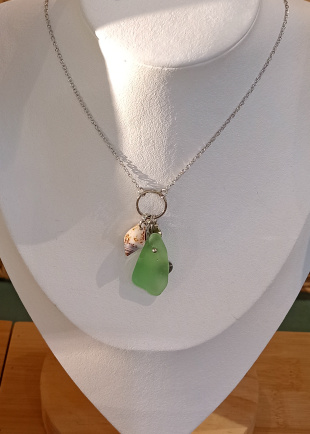
Next up, En Escale, is what everyone wants from a stay at the beach but does not know quite what to do to achieve it - to keep and mount little stones, sea polished glass and glittering fragments and turn them into jewellry. Or if you are en escale off a boat, why not get some as a souvenir?
It is the work of Joy Cabanes, as Sables Vert, eco-recycling jeweller.
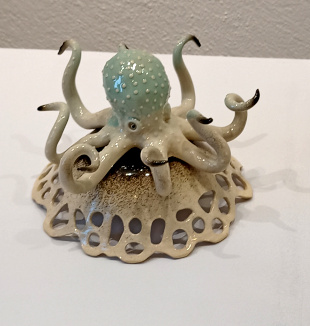
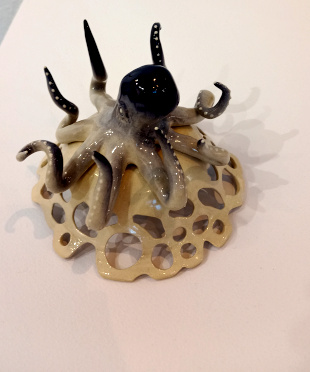
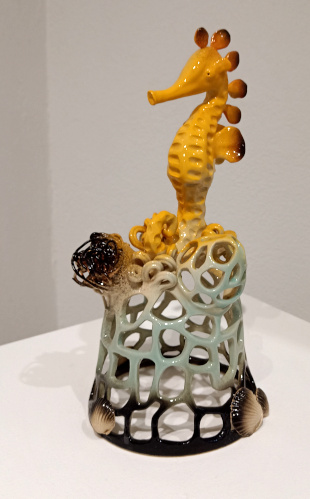
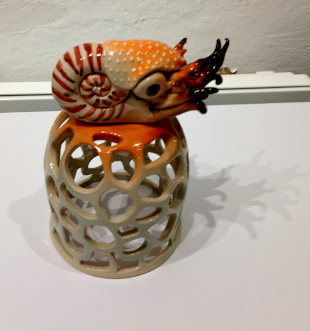
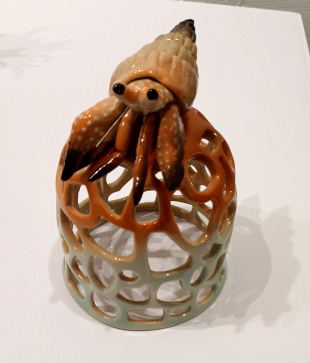
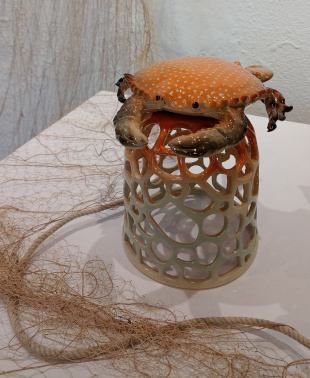
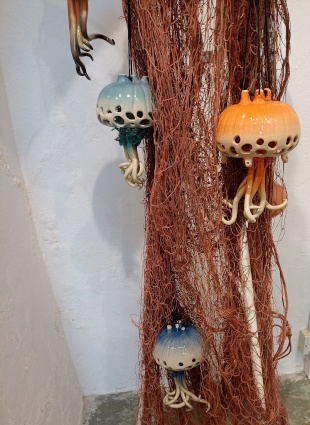
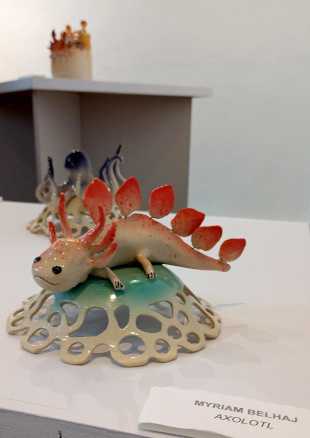
Then we come to Terre Mer whose artists are brought to Antibes by ID d'argile [1].
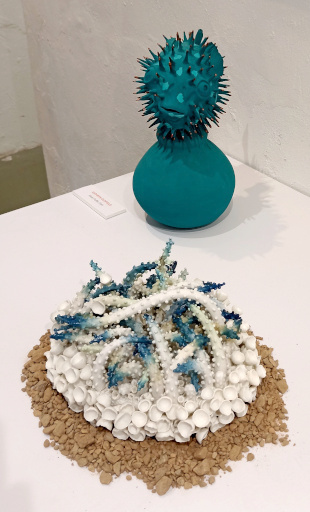
Is coral sea or land or does it mirror both?
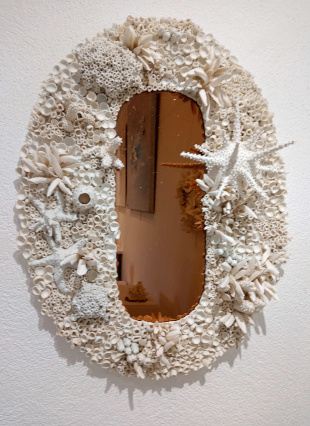
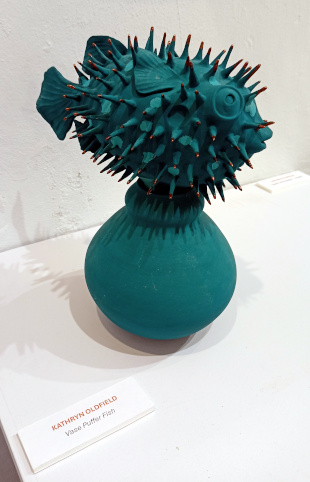
Kathryn Oldfield lives in the Provençal forest and sees her work as sculpture rather than pottery or ceramics. The vase may be pottery but the puffer fish is sculpture.
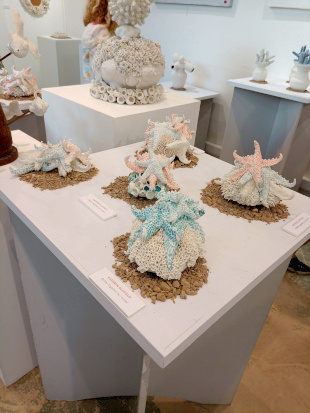
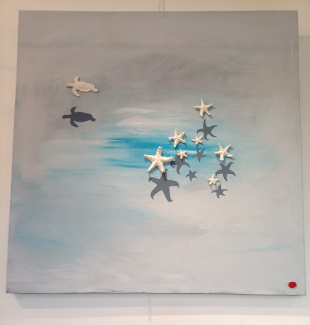
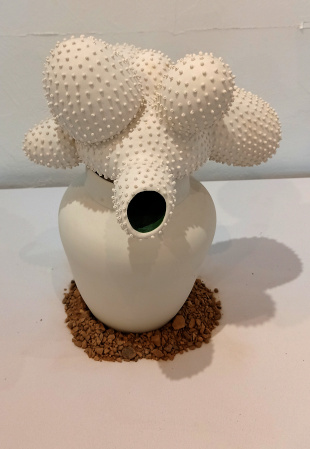
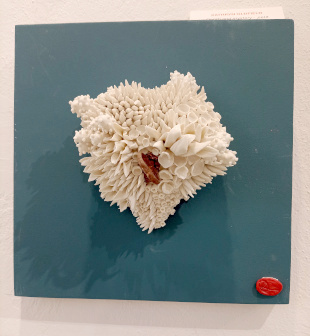
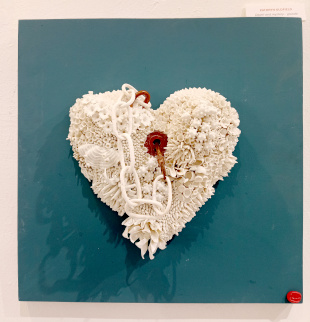
Amélie Sernis is an artist exploring variations on a theme.
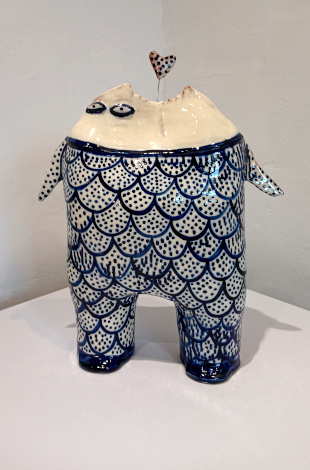
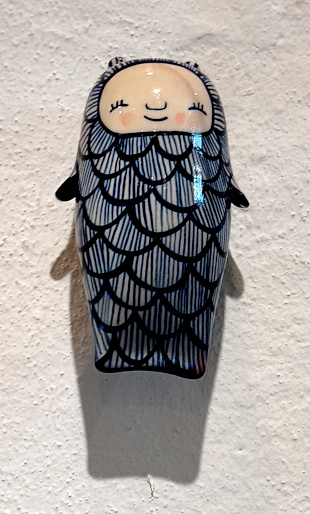
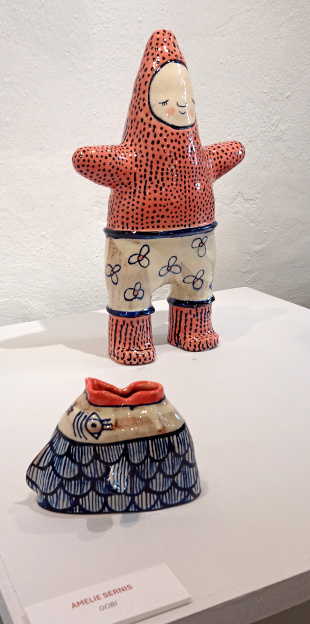
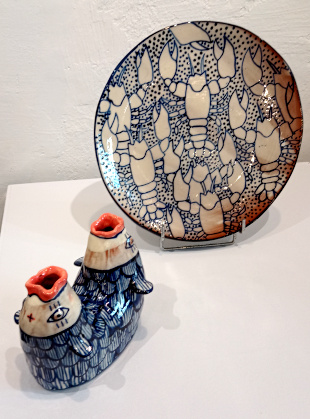
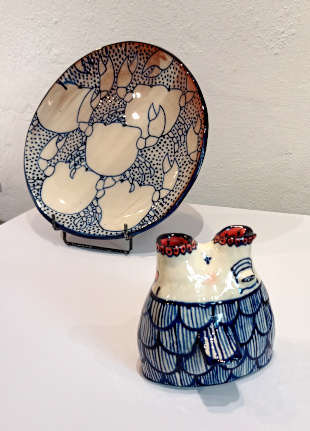
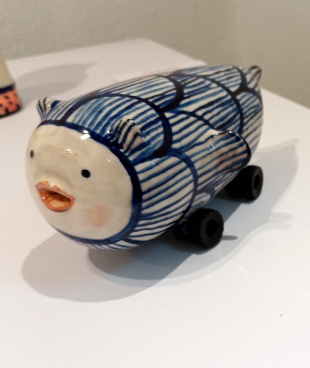
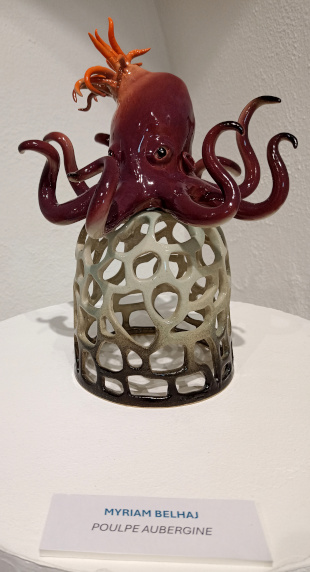
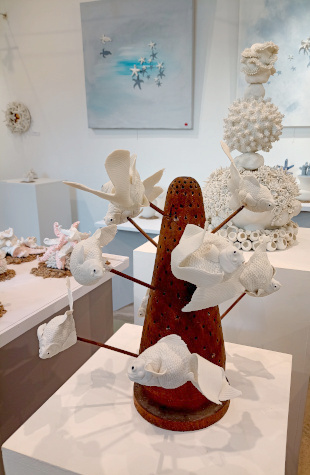
Myriam Belhaj is well up with sea creatures and we should not be eating the local king of the sea - the very intelligent octopus - now rarely seen even by the cormorants.